Best Crypto Futures Exchanges (March 2026)

Compare the top crypto futures exchanges for 2026 by fees, liquidity, funding, and regional access. Learn how perps work, what to watch with leverage and liquidation, and which platforms fit different trading styles.

Updated Mar. 19, 2026
Reviews in this list 7
Trusted Reviews Editorially curated & independently checked
Curated by Yousra Anwar Ahmed
Since Feb 2026 36 reviews
Checked by George Ong
Since Mar 2018 88 fact-checks
Affiliate Disclosure

Disclaimer: CryptoSlate may receive a commission when you click links on our site and make a purchase or complete an action with a third party. This does not influence our editorial independence, reviews, or ratings, and we always aim to provide accurate, transparent information to our readers.

Crypto futures let you trade contracts that track crypto prices, so you can go long or short without owning the underlying coin. This page ranks centralized exchanges that offer crypto futures, perpetual futures, and other crypto derivatives products — where those products are legally available. In practice, that means a crypto derivatives exchange offering perps and, in some markets, dated futures or options.

Availability and product menus vary by country (and sometimes by customer type). An exchange may offer full perpetual futures in one region but only limited derivatives — or none at all — elsewhere. For crypto derivatives trading, it’s worth confirming what’s available to you before you compare fees, funding, or features.

Perpetual futures don’t expire and typically use funding payments to keep prices close to spot, while dated futures settle on a fixed expiry date. Because futures are leveraged, losses can exceed your initial margin and liquidations can happen quickly.

How to use this page: use the Top Picks for a quick shortlist, compare the table by region and fees, then read the detailed reviews and beginner guide before placing your first trade.

Best Crypto Futures Trading Platforms

If you’re looking for the best crypto futures exchange for your region, start with these picks — then confirm you’re eligible for futures before you deposit.

Rank
Name
Score
Offer
Products
Secure Link
Rank 1
9.1
Pro‑grade platform with low maker–taker fees
Spot, Margin, Futures or Perps, OTC, Simple-buy Broker
Rank 2
9.0
New‑user voucher bundles
Spot, Margin, Futures or Perps, Options, OTC, Simple-buy Broker
Rank 3
9.0
Task‑based new‑user rewards in the app
Spot, Margin, Futures or Perps, Options, OTC, Simple-buy Broker
Rank 4
8.7
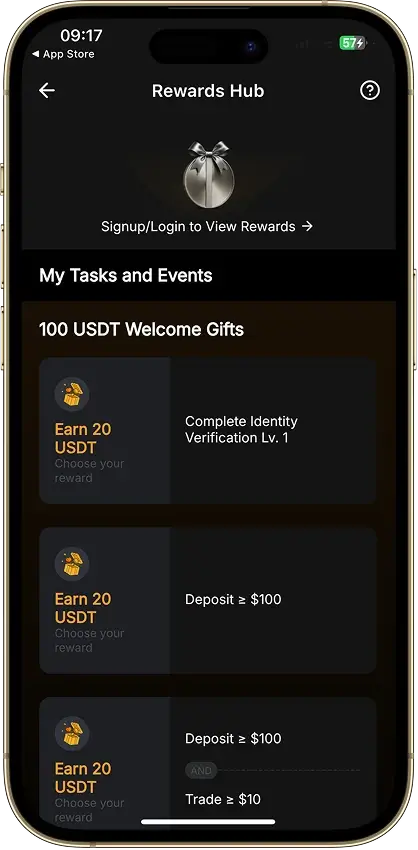
Up to 100 USDT bonus
Spot, Margin, Futures or Perps, Options, OTC, Simple-buy Broker
Rank 5
8.6
Deep USD liquidity and easy bank rails
Spot, Futures or Perps, OTC, Simple-buy Broker
Rank 6
8.3
Referral bonus up to $25 in CRO
Spot, Margin, Futures or Perps, Options, OTC, Simple-buy Broker
Rank 7
8.2
Longest‑running exchange (since 2011)
Spot, Futures or Perps, OTC

Most readers end up choosing based on one of three priorities: a regulated route with clean fiat rails, deep global liquidity and pro tooling, or a mobile-first app experience. Kraken and Coinbase generally fit the “regulated-first” bucket where futures are enabled. Binance, OKX, and Bybit usually lead on breadth and derivatives tooling in regions where they’re available. Crypto.com is the most mobile-native option of the group, while Bitstamp can be a more conservative choice in markets where its perpetuals are supported.

What counts as the best crypto derivatives exchange is usually a trade-off between access rules, liquidity on your pairs, and the tools you actually use.

Filter by your region (US vs UK vs EEA vs global), then shortlist by the pairs you actually trade (majors vs smaller-cap perps), and finally compare fees + funding + execution quality in the table before you open a position.

Comparison Table

NameCustodyProductsStakingTrading fees (low)Trading fees (high)
Kraken 500 Spot, Margin, Futures or Perps, OTC, Simple-buy Broker Yes 0.00 0.40
Binance 500 Spot, Margin, Futures or Perps, Options, OTC, Simple-buy Broker Yes 0.00 0.10
OKX 295 Spot, Margin, Futures or Perps, Options, OTC, Simple-buy Broker Yes 0.02 0.35
Bybit 350 Spot, Margin, Futures or Perps, Options, OTC, Simple-buy Broker Yes 0.00 0.10
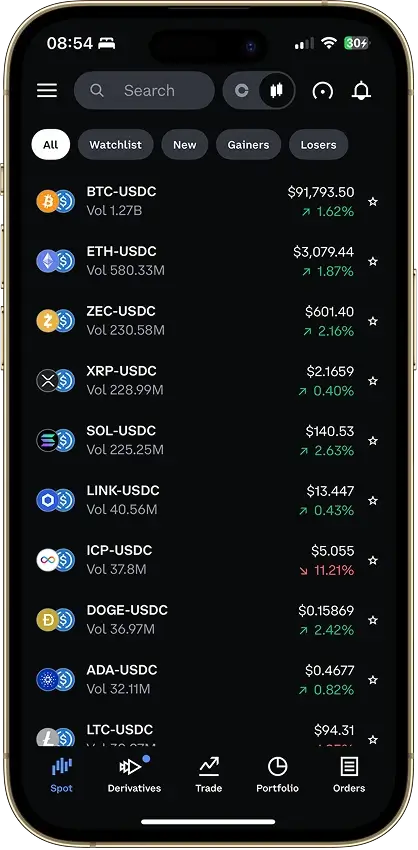
Coinbase 270 Spot, Futures or Perps, OTC, Simple-buy Broker Yes 0.00 0.60
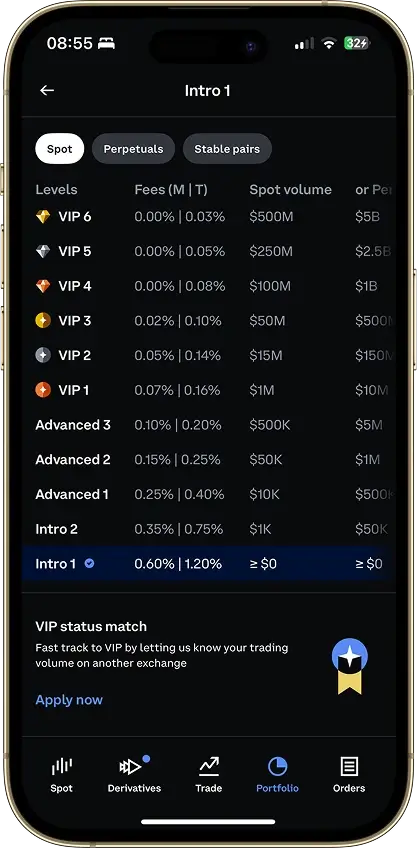
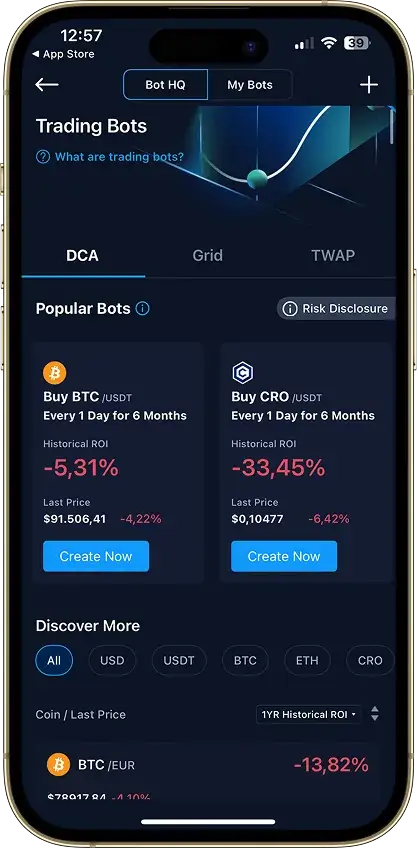
Crypto.com 438 Spot, Margin, Futures or Perps, Options, OTC, Simple-buy Broker Yes 0.00 0.50
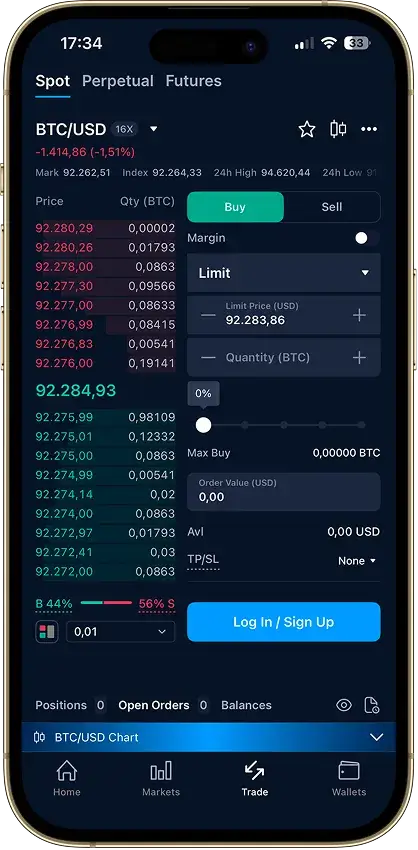
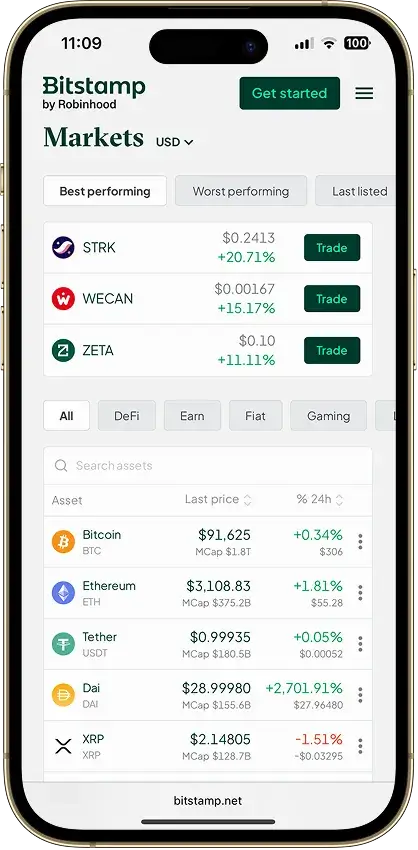
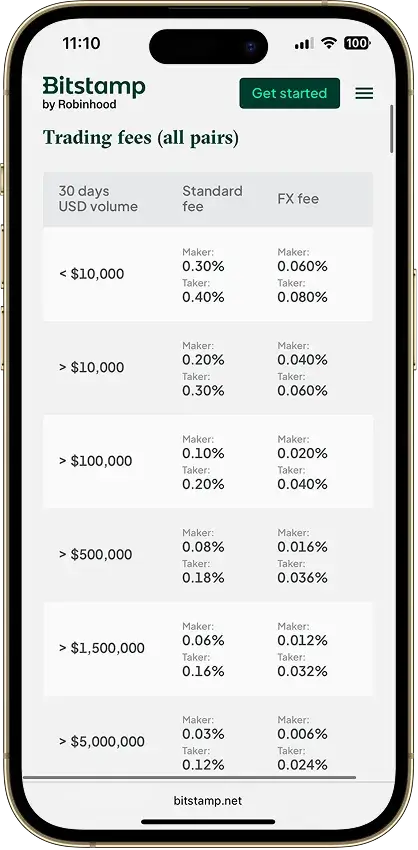
Bitstamp 107 Spot, Futures or Perps, OTC Yes 0.00 0.40

Many venues advertise the same headline features — perpetual futures, standard order types, and basic risk controls — but the experience can diverge sharply when markets move fast. Offshore derivatives leaders usually stand out for broader contract menus, higher leverage limits, and built-in automation, while regulated routes tend to prioritize clearer access rules, stronger fiat rails, and more conservative product design. Treat availability (US/UK/EEA) as the first filter, then compare total trading costs — fees, funding, and execution quality — on the pairs you actually trade.

The table is your fast filter. The reviews cover the details that decide outcomes in practice — margin mode behavior (isolated vs cross), collateral rules, funding cadence, and how liquidation pricing is calculated — plus the regional carve-outs that determine whether you can use the product.

Detailed Reviews

Most large futures venues now offer perps, isolated/cross margin, and a standard set of order types. Where they separate is what happens during stress: whether spreads blow out, whether mark price stays aligned, and how cleanly risk controls behave when volatility spikes. Offshore leaders usually compete on breadth, leverage limits, and automation, while regulated routes focus on clearer access rules, stronger fiat rails, and more conservative product design.

If you trade across several pairs, portfolio/unified margin can be a real advantage. For everyone else, the practical differentiators are simpler: a usable demo/testnet to rehearse order workflows, transparent funding and liquidation disclosures, and consistent transparency reporting (like proof-of-reserves updates). Pick what you can use in your region, then judge it on execution and risk design — not marketing.

Before you commit, cross-check each exchange’s futures fees and availability pages, then use the reviews to validate the details that change outcomes in practice: collateral type, margin rules, funding cadence, and regional carve-outs.

What Is Crypto Futures Trading?

Cryptocurrency futures trading (often shortened to crypto futures trading) is trading contracts that track the price of a cryptocurrency (like BTC or ETH), letting you go long (bet on price rising) or short (bet on price falling) without owning the coin itself. Most retail traders use perpetual futures (also called perps), which don’t expire and use a mechanism called funding to keep the contract price close to spot.

Futures are different from spot trading because you typically use leverage — meaning you control a larger position with a smaller amount of collateral. That can amplify gains, but it also amplifies losses and can trigger liquidation if your margin falls below the exchange’s requirements.

Key terms (quick definitions):

  • Leverage: Borrowed exposure (e.g., 5x means a $100 margin controls about $500 of position size).
  • Margin: The collateral you post to open/maintain a futures position. Exchanges usually track initial margin (to open) and maintenance margin (to keep it open).
  • Liquidation: Automatic closure of your position when losses reduce your margin below the maintenance requirement.
  • Funding rate: A periodic payment between long and short traders on perpetual futures (not a “fee” paid to the exchange). If funding is positive, longs typically pay shorts; if negative, shorts typically pay longs.

If you’re new, treat futures as an advanced product: start with small size, low leverage, and high-liquidity pairs like BTC and ETH — and only after you understand margin and liquidation mechanics.

How Crypto Futures Trading Works

Here’s the basic flow most traders follow when trading crypto futures (especially perpetual futures):

  1. Choose the contract (perpetual vs dated)
    • Perpetual futures (perps): No expiry; you’ll pay/receive funding.
    • Dated futures: Expire on a set date; pricing can trade at a premium/discount to spot until settlement.
  2. Deposit and select collateral
    • Move funds into the exchange’s derivatives wallet/account.
    • Your collateral might be USDT/USDC (common for “linear” perps) or sometimes coin-margined collateral on certain contracts.
  3. Set position size and leverage (margin requirement)
    • Pick the size you want to control, then set leverage (or margin).
    • Higher leverage lowers required margin, but reduces your buffer before liquidation.
  4. Pick margin mode (isolated vs cross)
    • Isolated margin: Only the margin assigned to that position is at risk (better for beginners).
    • Cross margin: Your available balance can support the position (more flexible, but can risk more of your account).
  5. Place your order and set risk controls
    • Limit orders can reduce fees and slippage; market orders prioritize speed.
    • Add basic controls where available: stop-loss, take-profit, and reduce-only to avoid accidental position increases.
  6. Track funding, PnL, and liquidation risk
    • On perps, funding is exchanged between longs and shorts on a schedule (it can materially impact returns).
    • Your PnL is usually based on mark price (not last traded price), and liquidation happens if margin drops below the maintenance margin threshold.
    • If a position moves against you, you can reduce size, add margin, or close the position to avoid liquidation.

Crypto Futures Trading for Beginners

If you’re new to futures trading crypto, your goal isn’t to “use more leverage” — it’s to avoid liquidation while you learn how margin, funding, and volatility behave in real time. Start small, trade the most liquid markets, and use conservative settings until you can explain exactly why a liquidation would happen.

Safety Rails to Use from Day One

  • Use isolated margin so one trade can’t drain your whole account.
  • Keep leverage low (many beginners start with 2x–5x) and size positions accordingly.
  • Start with the deepest markets (usually BTC and ETH) because they tend to have the cleanest execution.
  • Avoid illiquid alt contracts (thin order books + large wicks can liquidate you fast).
  • Use demo/testnet environments if the platform offers them, especially to practice stop-loss and reduce-only behavior.

Common Beginner Mistakes to Avoid

  • Overleveraging because the “max leverage” number looks like a feature.
  • Ignoring funding (on perps, funding can turn a small edge into a loss over time).
  • Trading during volatility spikes without wider stops or smaller size.
  • Using cross margin too early, which can put more of your balance at risk than you intend.
  • Market ordering into thin books, causing slippage that worsens liquidation distance.

A Simple First-Week Plan

  1. Start with one highly liquid perp (BTC or ETH), isolated margin, and low leverage.
  2. Use limit orders when possible, and always set a stop-loss.
  3. Track funding payments and liquidation price every time you open a position.
  4. Increase size only after you can hold risk constant and explain your margin buffer.

This page’s comparison table and reviews are designed to help you find platforms with the right mix of eligibility, liquidity, fees, and risk controls for your region.

Crypto Futures Paper Trading and Simulators

A crypto futures trading simulator (often called crypto futures paper trading) lets you practice order entry, margin modes, and risk controls without putting real money at risk. Some exchanges offer full testnets; others offer limited demo modes, and the experience can differ by region and product.

If you’re looking for the best crypto futures trading simulators, prioritize platforms that let you practice the exact workflows that matter: isolated vs cross margin, reduce-only orders, SL/TP, and what happens when you add margin or partially close.

How to use a simulator effectively:

  • Practice placing limit orders, stop-losses, and reduce-only exits until it’s automatic.
  • Track funding and mark price behavior (even in demo) so you learn what drives PnL.
  • Don’t treat demo results as proof of edge — real slippage, funding costs, and emotions are different with live funds.

Best Crypto Futures Platforms by Use Case

Platforms can look identical until you check what’s actually enabled where you live. Start with your region, then your experience level, then whether you care more about liquidity, tooling, or a simpler workflow.

Best Crypto Futures Exchange USA

Crypto futures access in the U.S. is narrower than in many markets, and it can vary by state, customer type, and the specific product you’re trying to trade. Many offshore perpetual-futures exchanges simply do not accept U.S. customers, so the right starting point is usually a regulated route where eligibility is clearly defined.

  • Coinbase — A strong starting point for eligible U.S. users who want a regulated path, clean UX, and reliable fiat rails.
  • Kraken — A solid option for eligible U.S. users who want a more advanced trading interface and deeper pro tooling; derivatives access depends on eligibility and product.
  • Alternative (not a crypto exchange): CME crypto futures via a traditional broker — Worth considering if you want fully regulated, exchange-traded crypto futures exposure (you’ll trade through a broker rather than a crypto exchange UI).

Always confirm that futures are enabled for your account before funding it, and don’t try to bypass regional restrictions — if access changes, you want to be able to close positions and withdraw normally.

Best Crypto Futures Trading Platform UK and Europe

Treat the UK and the EEA as separate cases. In the UK, retail access to crypto derivatives is commonly restricted, and some venues only offer derivatives to professional or otherwise eligible clients. In the EEA, availability and product menus depend on the exchange entity and your country.

UK (retail): If you’re a retail trader, assume direct futures access may be limited and start by checking each platform’s eligibility page. If you qualify as a professional client and derivatives are enabled, Kraken is often the most straightforward “regulated-first” starting point.

Europe / EEA (where supported):

  • Bitstamp — Often the simplest EEA route for perps where enabled, with a more conservative profile than offshore venues.
  • Kraken — A strong fit where derivatives are available and you want a trust-first platform with pro tooling.
  • Coinbase — A good option where futures products are available and you want strong compliance posture and fiat rails.

Best Crypto Futures Trading Platform for Beginners

Beginner-friendly futures platforms are the ones that make risk controls obvious (isolated margin, liquidation price, SL/TP, reduce-only) and don’t push high leverage as the main selling point. From the Top Picks, these are usually the easiest places to start when available in your region:

  • Coinbase — Clean UX and strong fiat rails; a good fit if you want a regulated path and conservative product design.
  • Kraken — A good fit if you plan to grow into pro features; strong security posture and clear risk tooling.
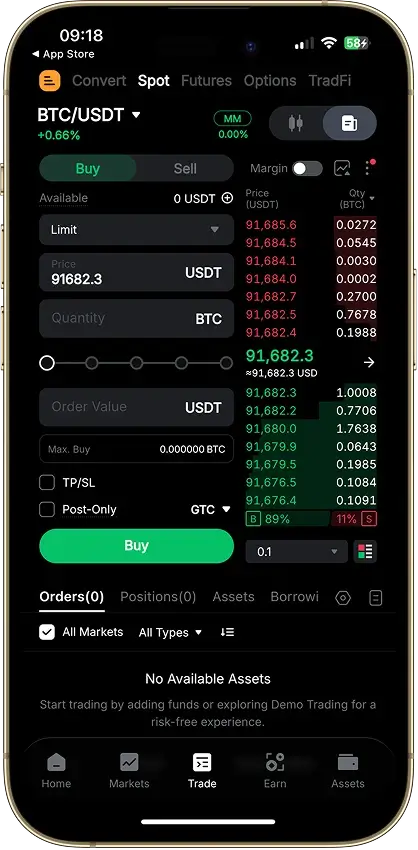
  • Crypto.com — Best if you prefer mobile-first trading inside an all-in-one app (availability varies).
  • Bitstamp — Consider if you’re in the EEA and want a region-supported, more conservative perpetuals option.

Avoid choosing a platform purely on max leverage. For beginners, liquidity on the majors, predictable funding, and clear risk controls usually matter more than contract count.

Best Crypto Futures Trading Bot and Copy Trading Platforms

Bots and copy trading can make execution easier, but they don’t reduce risk — they can scale your mistakes faster. If you use automation, treat it like a power tool: helpful with guardrails, dangerous without them.

Platforms that tend to be strongest here (where available):

  • Binance — Broad derivatives suite plus automation/copy features.
  • OKX — Strong bot ecosystem and pro account modes.
  • Bybit — Copy trading + bot tooling aimed at active perp traders.
  • Candidate to review: Bitget (often cited for copy trading + perps; verify regional eligibility before featuring).

What to look for before you copy or automate:

  • Verified performance stats (not just ROI screenshots)
  • Max drawdown and time-underwater metrics
  • Clear risk limits (position sizing, leverage caps)
  • Hard stops (stop-loss / reduce-only / kill switch)
  • API key controls (withdrawals disabled; least-privilege access)

Best App for Futures Trading Crypto

For mobile futures trading, UX and reliability matter more than novelty. You want fast order entry, clear liquidation and margin info, and risk controls you can set without friction.

  • Crypto.com — Strong mobile-first experience; good for traders who want futures inside an all-in-one app.
  • Binance — Feature-rich mobile derivatives trading with deep liquidity (where available).
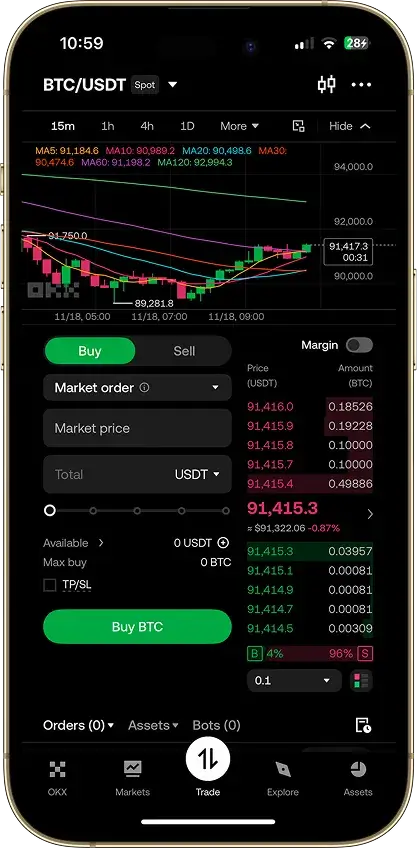
  • OKX — Strong pro tooling on mobile with advanced account modes (where available).
  • Coinbase — Clean UX and strong U.S. rails for eligible futures products.

Mobile checklist: reduce-only, SL/TP, clear margin mode, visible liquidation price, reliable alerts, and stable performance during volatility spikes.


Crypto Futures Fees, Funding Rates, and Hidden Costs

Futures costs aren’t just “maker/taker fees.” On perpetual futures, the biggest cost driver over time is often funding, and for larger or faster trades, spread and slippage can matter more than the advertised fee tier.

The Main Costs to Understand

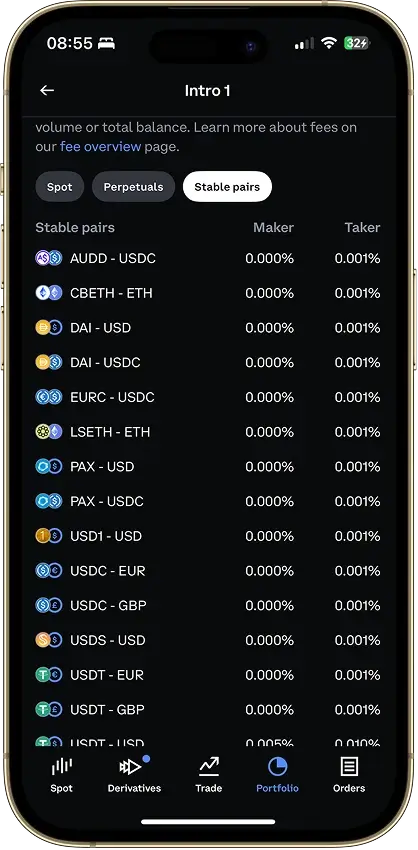
  • Maker/taker fees: What the exchange charges per fill. Maker fees apply when you add liquidity (limit orders that don’t fill instantly). Taker fees apply when you remove liquidity (market orders or aggressive limits).
  • Funding rate (perpetuals): A periodic payment exchanged between longs and shorts to keep perps close to spot. Funding can flip positive/negative, and it can meaningfully change your net return if you hold positions for days.
  • Spread + slippage: The hidden “execution cost.” The spread is the gap between best bid/ask; slippage is how far your fill moves as your order consumes the book. Thin markets and high volatility widen both.
  • Liquidation and risk fees: Some venues charge a liquidation fee or use an insurance fund/ADL system to manage bankrupt accounts. Even if there’s no explicit fee, liquidation mechanics can worsen outcomes if you’re trading too close to the liquidation price.
  • Withdrawal costs: Most exchanges pass through network fees (which vary by chain). Some also add withdrawal charges or minimums.

Why “Low Fees” Can Still Be Expensive

A platform can advertise low maker/taker rates, but if it has poor depth on your pair, you may pay more through slippage (especially on market orders) than you save on fees. For active traders, the best value is usually a combination of tight spreads, strong depth, predictable funding, and reliable execution — not just the lowest headline fee.

Quick checklist before choosing a venue: check the futures fee schedule, typical funding behavior on your main pairs (start with majors like BTC and ETH), average spread during normal hours, and whether the platform offers reduce-only, margin mode controls, and clear liquidation disclosures.

Crypto Futures Trading Volume, Open Interest, and Liquidity

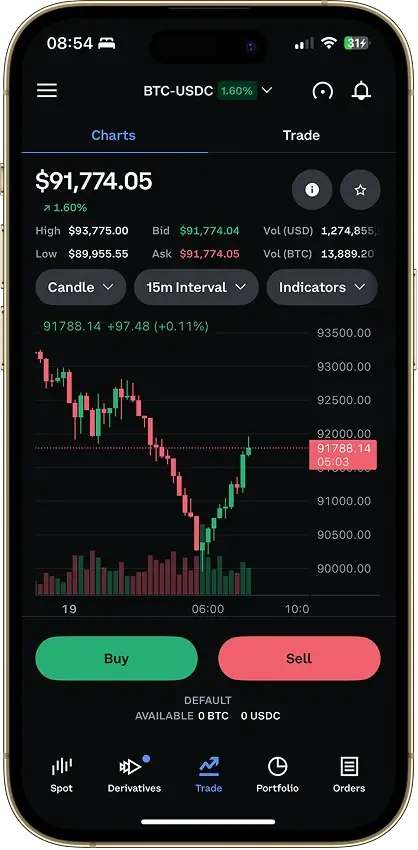
If you’re choosing a futures exchange (or deciding which contracts to trade), liquidity matters as much as fees. Good liquidity usually means tighter spreads, lower slippage, and fewer “surprise” liquidations caused by wicks or thin order books. When you compare crypto futures trading volume across exchanges, treat it as a starting signal — then validate spreads and depth on the exact pair you trade.

The 3 Metrics Traders Confuse Most Often

  • Trading volume: How much has traded over a period (e.g., 24h). Volume can spike during news events and doesn’t always tell you how easy it is to enter/exit right now.
  • Open interest (OI): The total value/size of open futures positions. Rising OI can signal more participation, but it can also increase liquidation cascades during fast moves.
  • Order book depth (and spread): How much liquidity sits close to the current price — often measured as depth within 0.1% or 1%. Depth and spread are what determine whether you’ll get clean fills.

Why Depth and Spread Often Matter More than Headline Volume

High reported volume doesn’t guarantee good execution. If the spread is wide or the book is thin, a market order can slip badly, and stop-loss orders may fill far from your intended price. In practice, the best futures venues tend to combine:

  • Tight spreads on BTC/ETH perps
  • Consistent depth (especially during volatile periods)
  • Stable mark price behavior and clear index methodology

Because most exchanges liquidate futures positions using the mark price (not the last traded price), a large gap between mark and last price can matter more than the candle you’re watching — especially in fast, thin markets.

Practical Ways to Use These Metrics

  • If you’re trading size or using higher leverage, prioritize venues with strong depth on your exact pair and reliable execution during volatility.
  • If you’re new, start with the deepest markets and avoid thin alt perps; they’re more prone to wicks and stop-loss slippage.
  • Don’t compare exchanges using volume alone — compare fees + funding + spread + depth together, because that’s what determines your real cost per trade.

Spot Trading vs Futures Trading Crypto

Spot and futures can both be “trading crypto,” but they behave very differently once you add leverage, funding, and liquidation mechanics.

FactorSpot tradingFutures trading (perpetuals/dated)
Asset ownershipYou own the asset you buyYou trade a contract that tracks price; no ownership of the coin
LeverageUsually none (or limited via margin products)Common; position size can be multiples of your margin
Liquidation riskNo liquidation in basic spot tradingYes — positions can be liquidated if margin falls below maintenance
Funding / carry costsNo funding paymentsPerpetuals use funding; dated futures can trade at premium/discount until expiry
ComplexityLower (buy/sell)Higher (margin modes, liquidation price, funding, mark price)
Who it suitsBeginners, long-term holders, simple “buy and hold”Experienced traders, hedgers, short sellers, active risk-managed strategies

If you’re new, spot is usually the better place to learn execution and risk management. Futures make more sense once you can explain margin and liquidation in plain terms and you’re comfortable controlling risk with sizing, stops, and conservative leverage.

Margin Trading vs Futures Trading Crypto

Margin trading and futures are both leveraged, but they get there in different ways. Margin trading is typically spot trading with borrowed funds — you buy/sell the underlying asset and pay borrowing interest. Futures trading uses contracts; you don’t borrow the coin, but you do manage margin and (on perps) funding payments.

FactorMargin Trading (Spot)Futures Trading
Asset exposureOwn the asset + borrow against itContract exposure; no ownership
Main ongoing costBorrow interestFunding (perps) or basis/roll (dated)
Liquidation triggerMargin ratio vs borrowed balanceMaintenance margin vs mark price
Best forShort-term leverage on spotHedging, shorting, and active trading
Common pitfallInterest + borrowing limitsLiquidation from leverage + wicks

If you’re weighing crypto margin trading vs crypto futures trading, focus on the real trade-offs: borrow interest versus funding, and how liquidation behaves under fast volatility.

Trading Futures vs Options in Crypto

Futures and options are both crypto derivatives, but they express risk differently. A futures position has a linear payoff — your PnL moves with price — and leverage means you can be liquidated if your margin buffer runs out. Options require paying a premium upfront; for option buyers, the maximum loss is typically that premium, but the trade can still expire worthless and pricing is affected by time decay and implied volatility.

If you’re deciding between trading futures vs options in crypto, futures are usually simpler to understand but harsher when you’re wrong, while options can offer more controlled risk at the cost of added complexity. In crypto futures trading vs options trading, the key trade-off is often liquidation risk versus premium and time decay — and in both cases, liquidity varies by platform and pair.

Which Coins Are Most Used for Crypto Futures Trading?

In crypto futures, most real liquidity concentrates in a relatively small group of contracts. The “best” futures market isn’t the one with the most hype — it’s the one with tight spreads, strong order-book depth, predictable funding, and reliable execution on the pair you actually trade.

The Most Liquid Futures Markets (Typical Across Major Venues)

  • BTC perpetual futures (e.g., BTCUSDT / BTCUSD)
  • ETH perpetual futures (e.g., ETHUSDT / ETHUSD)

After BTC and ETH, liquidity often clusters around a handful of large-cap alts. Which ones are “most used” depends on the exchange, but common examples include:

  • SOL perps
  • XRP perps
  • BNB perps
  • DOGE perps

How to Choose Futures Pairs Safely (Especially if You’re New)

  • Start with BTC and ETH until you can manage funding and liquidation risk consistently.
  • Compare spread + 1% depth on your exchange — thin books can turn small moves into large losses via slippage.
  • Check funding behavior on the pair (funding can be a real cost if you hold positions).
  • Avoid low-liquidity alt contracts if you’re using leverage; they’re more prone to wicks, gaps, and stop-loss slippage.

If you want a simple default: trade the majors only (BTC/ETH), use isolated margin, keep leverage low, and size positions so a normal volatility swing doesn’t put you near liquidation.

Crypto Futures Trading Strategies

This section is educational only. Futures strategies can look simple on paper, but leverage, funding, and liquidation mechanics change the math fast. If you’re new, treat strategies as risk frameworks first — the goal is to survive volatility, not “find a secret setup.”

Crypto Futures Scalping Strategy

Scalping aims to capture small moves using frequent entries and exits. It typically relies on tight spreads, strong depth, and fast execution.

Risk-first notes: keep leverage conservative, avoid thin alt perps, and assume slippage will be worse during volatility spikes. Use predefined stops, and watch fees + funding — lots of small trades can get eaten by costs.

Crypto Futures Swing Trading Strategy

Swing traders hold positions longer (hours to days) to capture larger moves, often using trend and support/resistance levels.

Risk-first notes: funding can become a major cost (or benefit) on perps when you hold longer. Size positions so a normal volatility swing won’t push you near liquidation, and prefer liquid pairs where mark price and index behavior are more stable.

Hedging Spot Exposure with Futures

Hedging uses futures to reduce downside on a spot portfolio — for example, shorting BTC/ETH perps while keeping spot holdings.

Risk-first notes: hedges can drift if you don’t manage funding and basis (the gap between futures and spot). Keep the hedge size and duration explicit (what are you protecting, and for how long?), and avoid turning a hedge into a leveraged directional bet.

Basis and Carry Trades (Advanced)

Basis/carry strategies aim to capture the spread between futures and spot (or between different maturities), often using lower directional exposure than outright longs/shorts.

Risk-first notes: these are operationally complex. You’re exposed to exchange risk, margin requirements, liquidation mechanics, and funding/basis changes that can compress returns. Only attempt this after you understand collateral rules, borrow/transfer costs, and how the platform handles extreme moves.

A good default across strategies: pick liquid markets, use isolated margin where possible, keep leverage lower than you think you need, and measure your real costs (fees + funding + slippage) before scaling up.

Risks of Crypto Futures Trading

Crypto futures amplify both outcomes and mistakes. The main risk isn’t just “price goes against you” — it’s that leverage, funding, and liquidation mechanics can turn a normal move into a forced exit at the worst possible moment.

The Biggest Risks to Understand

  • Liquidation risk: If your margin falls below maintenance margin, the exchange can liquidate your position automatically.
  • Funding drag (perps): Funding payments can meaningfully reduce returns if you hold positions for days — and funding can flip quickly in crowded trades.

  • Gap and wick risk: Fast moves and thin books can cause large wicks; stops may slip and liquidation buffers can vanish.
  • Execution risk (spread + slippage): Poor depth can make entries/exits much more expensive than your fee tier suggests.
  • Mark price / index mechanics: Liquidations are typically based on mark price, not last price. If you don’t understand how mark price is calculated, you can be surprised.
  • ADL / deleveraging and insurance fund mechanics: In extreme conditions, platforms may use auto-deleveraging or other mechanisms that impact closes.
  • Counterparty and platform risk: You’re exposed to exchange solvency, operational resilience, and custody/security posture.
  • Jurisdiction and eligibility risk: Futures access can change by country, customer type, or regulatory updates, sometimes with short notice.
  • Overtrading and psychology: Leverage can magnify emotional decisions; frequent trading can compound fees, funding, and mistakes.

Risk Checklist (Before Your Next Futures Trade)

  • Am I using isolated margin (especially if I’m not advanced)?
  • Is my leverage low enough that a normal volatility move won’t put me near liquidation?
  • Do I know my liquidation price, and have I set a stop-loss that triggers well before it?
  • Have I checked funding rate and when it’s charged/paid next?
  • Am I trading a liquid market with tight spreads and decent depth?
  • Am I using limit orders where possible to reduce slippage and taker fees?
  • Do I understand the platform’s mark price, liquidation rules, and any ADL/insurance-fund mechanics?
  • Have I verified eligibility for my region and that I can withdraw funds if rules change?

If you can’t answer most of these confidently, treat futures as a learning environment: reduce size, lower leverage, or stick to spot until your risk process is consistent.

How to Choose a Crypto Futures Exchange

Choosing a futures venue is less about “which exchange is biggest” and more about fit: what’s available in your region, reliable execution on your pairs, and risk controls that match how you trade. A good crypto futures trading platform makes margin mode, funding schedules, and liquidation price easy to see before you place an order. Use this checklist to narrow to 2–3 platforms, then confirm details on the exchange’s official fees and availability pages before depositing.

Checklist (What to Verify Before You Commit)

  • Regional eligibility (first filter): Confirm futures access for your country and customer type (retail vs professional). Many exchanges have different product menus by entity/region.
  • Liquidity and depth on your pairs: Check spreads and depth on the most liquid perps (typically BTC and ETH) first, then on any smaller-cap contracts you plan to trade. Poor depth often costs more than fees via slippage.
  • Fees + funding (real cost of holding): Compare maker/taker tiers and typical funding behavior on your main pairs. If you hold positions longer than a few hours, funding can matter as much as trading fees.
  • Collateral types + margin modes: Prefer clear support for isolated vs cross margin, and understand whether contracts are USDT/USDC-margined (linear) or coin-margined (inverse). Make sure the collateral model fits your risk tolerance.
  • Risk controls and order tools: Look for stop-loss/TP, reduce-only, position limits, and clear liquidation pricing. Advanced traders may also care about portfolio/unified margin features.
  • Transparency signals (proof of reserves / reporting): If the venue publishes proof-of-reserves or other transparency reporting, check cadence and scope — and don’t treat any single metric as a guarantee.
  • Security track record: Research history of security incidents, withdrawal freezes, and how the exchange communicates during outages. Favor platforms with mature security controls and clear disclosures.
  • Fiat rails you actually need: Make sure deposit/withdraw options and costs work for your location (bank transfer rails, card options, stablecoin on/off ramps).
  • Customer support quality: Futures issues are time-sensitive. Look for responsive support channels and a clear escalation path.

Even after you pick a platform, start with a small deposit and trade a liquid contract (usually BTC or ETH) on isolated margin. You want to validate spreads, funding behavior, and order execution in real conditions before you scale up.

How We Ranked the Best Crypto Futures Trading Platforms

This page uses the same criteria as the main /crypto-exchanges/ hub (CryptoSlate’s exchange scoring framework), which evaluates exchanges across market quality, fees, product offering, safety & transparency, platform usability, payments/fiat rails, and support. For a futures-focused list, we keep those categories but put extra weight on derivatives-specific factors: futures liquidity and depth on major pairs, fees + funding behavior, margin and liquidation design (isolated/cross, collateral types, risk controls), pro tooling/APIs, and regional eligibility for derivatives.

Because futures access and fee schedules change frequently, rankings are refreshed when we confirm material updates to availability, pricing, or disclosures.

Start With Eligibility and Liquidity — Not Leverage

Crypto futures platforms split into two camps: regulated routes that prioritize eligibility, banking rails, and conservative risk controls, and offshore derivatives leaders that offer broader contracts, higher leverage, and more automation (where permitted). If you’re new to trading, don’t need to short, or you’re building a long-term position, spot trading is usually the safer default.

If you do trade futures, choose the exchange that’s actually available in your region, then compare the things that change outcomes: liquidity and depth on the majors (especially BTC and ETH), total costs (fees, funding, and execution), margin modes (isolated vs cross), liquidation rules, and transparency/security signals. Start with small size, low leverage, and isolated margin until your process is consistent.

FAQ

What is crypto futures trading?

Crypto futures trading is trading contracts that track crypto prices (like BTC or ETH) so you can go long or short without owning the underlying coin. Most retail activity happens on perpetual futures (perps), which don’t expire and use funding payments.

How does crypto futures trading work?

You post collateral (margin), choose a contract, set position size and leverage, and place orders. Your profit/loss changes as price moves, and if margin drops below the maintenance requirement the position can be liquidated.

What is leverage in crypto futures trading?

Leverage lets you control a larger position with less collateral (e.g., 5x leverage means a $100 margin controls roughly $500 of exposure). It increases potential upside, but it also increases the speed and size of losses.

Is crypto futures trading available in the US?

It can be, but access is more limited than in many regions and depends on the platform, your eligibility, and the specific product. Many global perpetual-futures venues restrict U.S. users, while regulated offerings may be available through approved venues and product types.

Can UK retail traders trade crypto futures?

In many cases, UK retail traders face restrictions on crypto derivatives products. Availability can differ by platform and customer type (retail vs professional), so always check the exchange’s eligibility pages before depositing.

Crypto futures vs spot trading: what’s the difference?

Spot trading means buying/selling the actual asset; futures trading means trading a contract that tracks price. Futures typically involve leverage, funding (for perps), and liquidation risk — which makes them more complex and higher risk than basic spot trading.

Which platform is best for beginners?

For most beginners, the “best” platform is the one that’s available in your region and makes it easy to trade small size with clear risk controls (isolated margin, visible liquidation price, SL/TP, reduce-only). In our Top Picks, regulated-first options like Coinbase or Kraken are often the most beginner-friendly starting points where eligible.

Is crypto futures trading profitable?

It can be, but it’s not “easy money.” Fees, funding, and slippage add up, and leverage can force liquidations even on normal volatility. If you can’t consistently control risk (position sizing, leverage, stops), futures often become expensive quickly.

How risky is crypto futures trading?

High risk. The biggest dangers are liquidation, funding drag, slippage during volatility spikes, and overtrading. If you’re new, use isolated margin, keep leverage low, and stick to major pairs like BTC and ETH.

How do funding rates work?

Funding on perpetual futures is a periodic payment exchanged between longs and shorts to keep perp prices close to spot. If funding is positive, longs typically pay shorts; if negative, shorts typically pay longs. Funding can change rapidly, so always check it before holding positions for hours or days.

Are crypto futures trading signals worth it?

Crypto futures trading signals can be useful as ideas, but they’re also a common source of overtrading and scams. If you use signals at all, treat them as a starting point: confirm liquidity, size small, set a stop, and avoid anyone promising guaranteed returns or asking for custody of funds.

How to report crypto futures trading on taxes?

Tax treatment depends on your country and the product you trade (perpetuals vs dated futures, CFDs, exchange-traded futures, etc.). Keep detailed records of trades, funding payments, fees, and realized PnL, and use tax software or a qualified professional to classify and report correctly.